Lady With an Ermine: Da Vinci's Masterpiece and Its Enduring Mysteries
Among the constellation of Leonardo da Vinci's immortal works, the
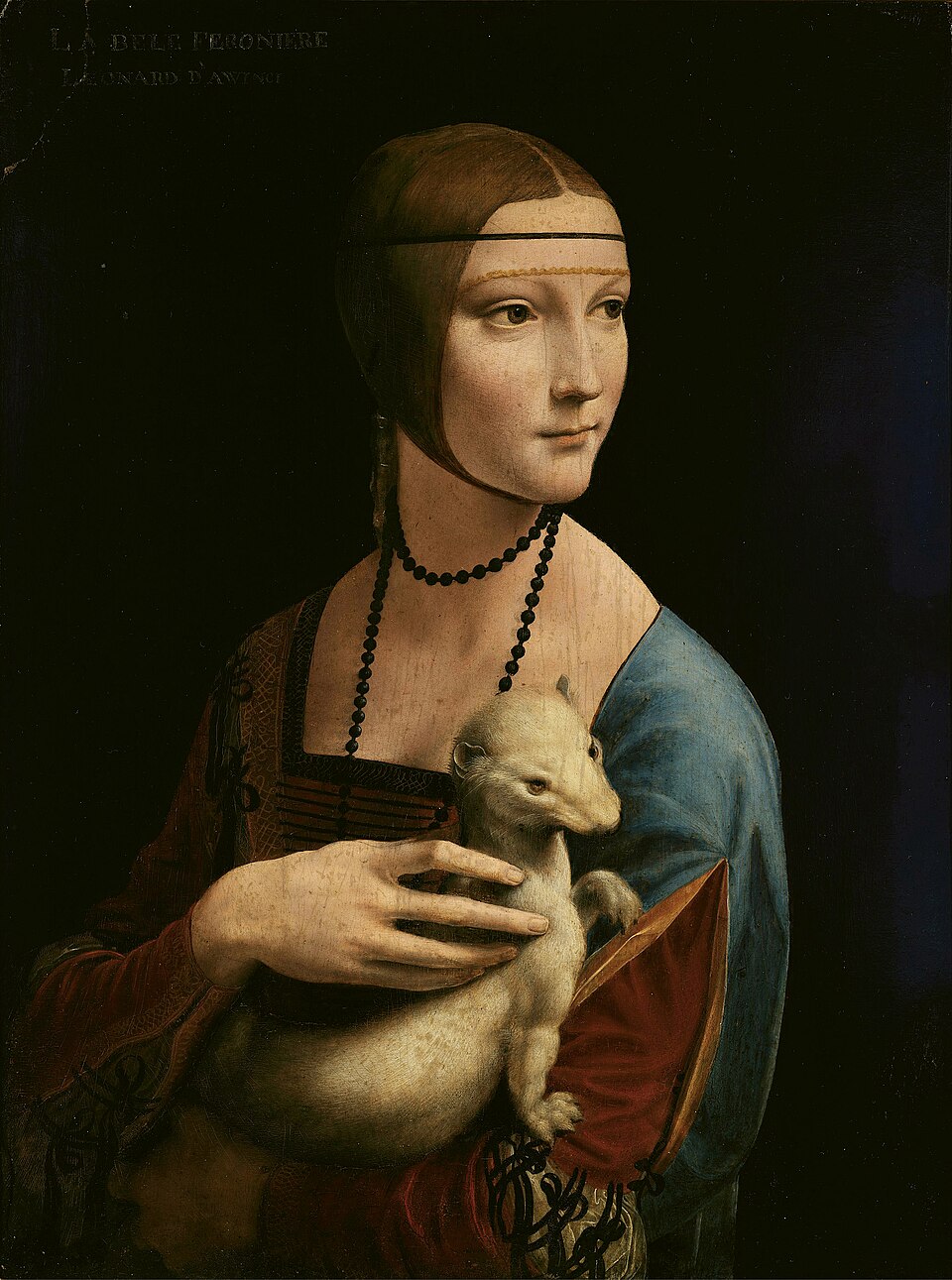
Lady With an Ermine stands out as a portrait of profound beauty, subtle symbolism, and captivating history. Painted circa 1489-1490 during his prolific period serving the Duke of Milan, Ludovico Sforza, this masterpiece transcends mere likeness, offering a window into Renaissance aristocratic life and da Vinci's unparalleled genius. It's a painting that doesn't just depict a woman; it captures a moment, a personality, and a web of hidden meanings that continue to fascinate art historians and enthusiasts alike. From its meticulous detail to its dramatic journey through centuries, the "Lady With an Ermine" invites us to peel back layers of history, art, and intrigue.
The Enigmatic Subject: Cecilia Gallerani
The captivating young woman at the heart of this portrait is identified as Cecilia Gallerani, who was approximately 16 years old at the time da Vinci rendered her image. Far from being just another noble sitter, Cecilia was the intelligent and cultured mistress of Ludovico Sforza, the Duke of Milan – Leonardo's patron. Born in Siena, Italy, around 1473, Cecilia received a remarkable education for a woman of her era. She was proficient in Latin, possessed significant musical talent, and even wrote poetry, making her a prominent figure in the sophisticated Milanese court.
Da Vinci's portrayal of Cecilia is a testament to his revolutionary approach to portraiture. Unlike many contemporary artists who favored static, profile views, Leonardo presents Cecilia in a three-quarter turn, her gaze directed slightly away from the viewer but full of vibrant energy. Her head is gently tilted, and her expression suggests an inner life, a psychological depth that was unprecedented. This dynamic pose, combined with the subtle play of light and shadow (sfumato), brings Cecilia to life, making her seem almost ready to converse. The choice to depict her with such vivacity underscores not only da Vinci's skill but also the sitter's intellectual and social standing, suggesting a relationship of mutual respect between artist and subject.
Symbolism and Hidden Meanings Woven into the Canvas
Perhaps the most compelling aspect of the
Lady With an Ermine is the animal itself, clutched gently by Cecilia. The ermine, a weasel in its striking winter coat, is no mere decorative accessory; it is imbued with multiple layers of symbolism that speak volumes about both Cecilia and her powerful lover, the Duke.
*
Purity and Chastity: In Renaissance iconography, the ermine was a widely recognized symbol of purity, chastity, and moral virtue. Legend had it that an ermine would rather die than soil its pristine white coat. This association served to portray Cecilia Gallerani as a chaste and wholesome lady, despite her status as the Duke's mistress—a common practice in courtly love during the period.
*
A Clever Pun: Da Vinci, known for his intellectual playfulness, likely incorporated a clever linguistic pun. The Greek word for weasel is "galê" (or "galee"), which bears a striking resemblance to Cecilia's family name, "Gallerani." This subtle yet direct reference would have been instantly recognized by those in the sophisticated Milanese court.
*
The Duke's Emblem: Another powerful interpretation connects the ermine directly to Ludovico Sforza himself. The Duke had been honored by the King of Naples with the prestigious Order of the Ermine, earning him the nickname "Ermellino Bianco" (White Ermine). By including this animal, da Vinci subtly hints at Cecilia's relationship with the Duke, making the portrait a testament to their bond without explicitly painting them together. This allegorical representation was a sophisticated way to acknowledge their affair, especially since the Duke was married to Beatrice d'Este.
*
Allegory of Pregnancy: Some art historians even suggest a more intimate symbolism: that the ermine might be subtly covering Cecilia's midsection, hinting at her pregnancy with the Duke's son, Cesare, who was born shortly after the painting's completion. This interpretation adds a layer of scandalous yet poignant humanity to the artwork.
Da Vinci's brilliance lies in his ability to weave these complex meanings into a single, elegant symbol, transforming the portrait into a sophisticated visual narrative that reveals more the longer one gazes upon it.
A Journey Through Time: Provenance and Technical Revelation
The remarkable journey of the
Lady With an Ermine is as compelling as its artistic merits. After its creation in Milan, the painting's whereabouts for several centuries remained largely undocumented. It resurfaced in 1800 when it was purchased in Italy by the young Polish Prince Adam Czartoryski, who acquired it as a gift for his mother, Princess Izabela Czartoryska, a passionate art collector and the founder of the Czartoryski Museum.
Princess Izabela, a visionary patron of the arts, initially found the blue background of the portrait somewhat unappealing and, in a now-controversial decision, had it painted over with a uniform black color. Fortunately, she recognized the painting's intrinsic value and displayed it proudly in her Gothic House in Puławy. The painting's subsequent movements reflect Poland's tumultuous history, seeing it deported to Paris during the November Uprising and eventually brought to Krakow at the end of the 19th century to become a cornerstone of the Czartoryski Museum collection.
Beyond its intriguing provenance, the "Lady With an Ermine" also offers fascinating insights into da Vinci's working methods. The painting is executed in oil on a small wooden panel, measuring 54.8 x 40.3 cm. Advanced scientific analysis, including X-rays, has revealed several intriguing details and changes:
*
Evolving Composition: Early X-rays showed traces of an original background featuring a door or window, later painted over by da Vinci himself to create the stark, dark backdrop we see today. This change allowed the figure of Cecilia to stand out more dramatically, enhancing the portrait's psychological intensity.
*
Retouches and Alterations: The painting has undergone various retouches throughout its history. For instance, Cecilia's dress was originally more transparent, and her hair was initially shorter, perhaps extending only to her chin. These alterations, some by da Vinci and others later, reflect changing aesthetic sensibilities and the painting's complex life.
*
Authorship Debates: While widely attributed to Leonardo da Vinci today, there were historical periods of speculation regarding its authorship, with names like Boltraffio (one of da Vinci's pupils) or da Predis sometimes mentioned. However, the overwhelming consensus among art historians now firmly attributes it to Leonardo, recognizing his distinctive mastery in composition, psychological insight, and sfumato technique.
Today, after extensive renovations, the Czartoryski Museum in Krakow, Poland, is once again the proud home of the "Lady With an Ermine," drawing visitors from around the globe to witness this masterpiece firsthand. While it occasionally tours major international exhibitions, its permanent return to Krakow solidified its place as one of Poland's most treasured national artifacts and a global artistic jewel.
Legacy and Enduring Appeal
The "Lady With an Ermine" is more than just a painting; it is a historical artifact, a testament to artistic genius, and a portal to the past. Leonardo da Vinci's ability to imbue a portrait with such layers of meaning, psychological depth, and technical brilliance ensures its enduring appeal. It captures a specific moment in time—the Renaissance court of Milan—yet its themes of love, power, symbolism, and individual identity remain timeless. For anyone seeking to understand the breadth of da Vinci's talent or the intricate world of Renaissance art, the "Lady With an Ermine" offers an inexhaustible source of fascination and wonder. Its serene beauty, coupled with its dramatic history and hidden messages, guarantees its place as one of the most beloved and studied portraits in Western art.