Unraveling the Hidden Meanings of Da Vinci's Lady With an Ermine
In the pantheon of Renaissance masterpieces, Leonardo da Vinci's
Lady With an Ermine stands as a compelling enigma, captivating viewers with its subtle beauty and layers of hidden meaning. More than just a portrait, this iconic artwork offers a window into the intellectual prowess of its subject, the political climate of 15th-century Milan, and the unparalleled genius of Leonardo himself. Often overshadowed by the Mona Lisa, the
Lady With an Ermine reveals a depth of symbolism and artistic innovation that continues to fascinate art historians and enthusiasts alike, inviting us to look beyond the surface and decode its rich narrative.
Cecilia Gallerani: The Luminous Lady Behind the Ermine
At the heart of this mesmerizing portrait is Cecilia Gallerani, a figure of remarkable intellect and charm who captured the attention of one of the most powerful men in Italy. Born around 1473 in Siena, Cecilia was no ordinary courtesan; she hailed from an educated family and received a solid education herself, distinguishing her from many women of her time. Gifted in languages, she was proficient in Latin, possessed musical talent, and even penned poetry. It was her sharp mind and cultured demeanor, alongside her beauty, that drew her to Lodovico Sforza, the Duke of Milan, upon her arrival in Monastero Nuovo in 1489. She was merely 16 years old when Leonardo da Vinci, then in the Duke's service (circa 1489-1490), began painting her portrait.
Leonardo's rendition of Cecilia is striking in its realism and psychological depth. Unlike the static, profile portraits common during the early Renaissance, the
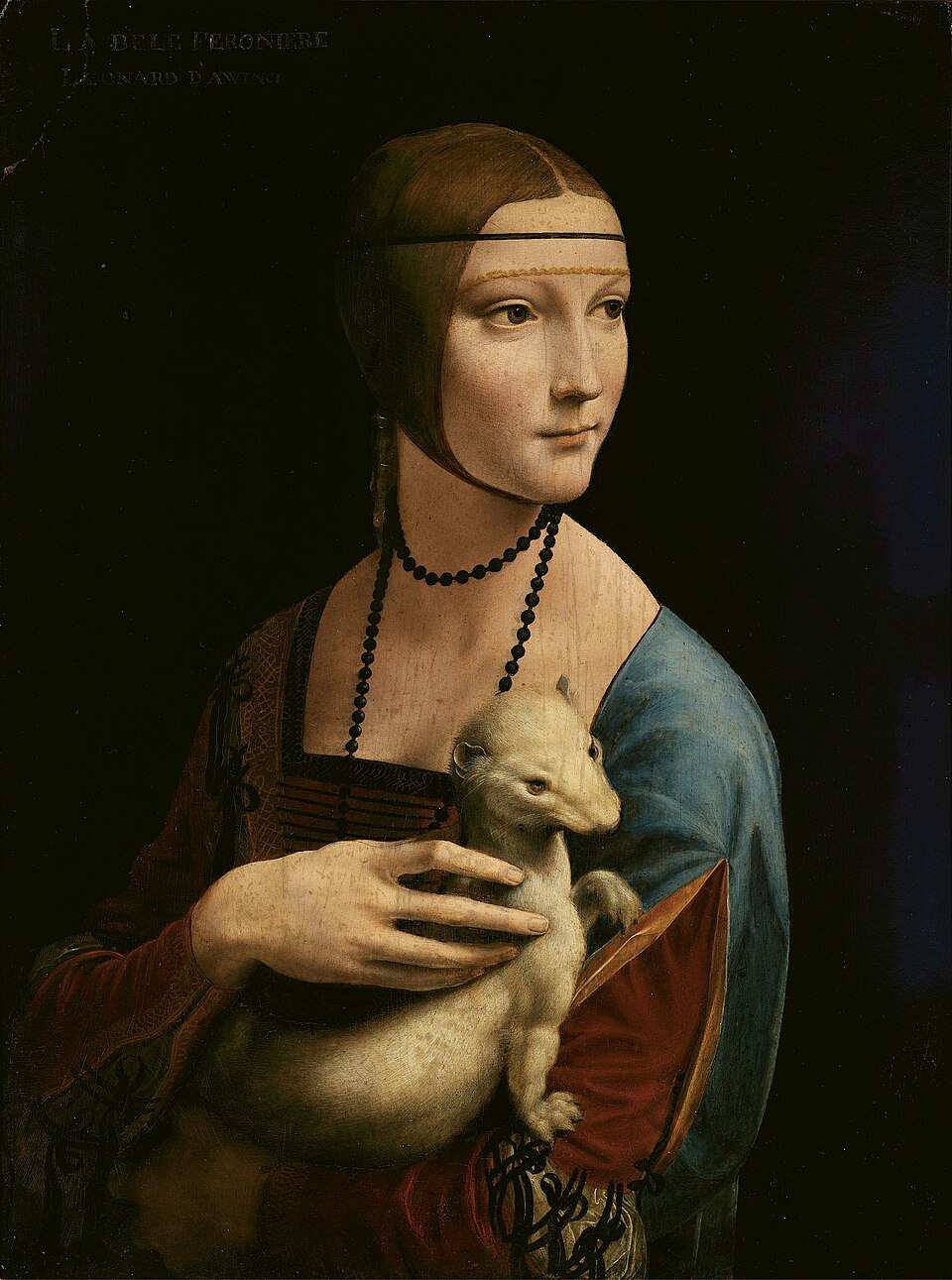
Lady With an Ermine presents Gallerani in a three-quarter pose, her head slightly turned, her gaze seemingly directed at someone or something just beyond the frame. This innovative pose imbues the portrait with a sense of dynamism and immediacy, as if she has just been interrupted or is about to speak. It’s a testament to Leonardo's ability to capture not just a likeness, but the very essence and inner life of his subject, making her feel incredibly present and alive even centuries later.
The Enigmatic Ermine: Deciphering Da Vinci's Clever Symbolism
Perhaps the most talked-about element of the painting is the creature Cecilia cradles in her arms – an ermine. Far from being a mere decorative accessory, the presence of this animal is laden with multiple layers of symbolism, a characteristic hallmark of Renaissance art and Leonardo’s intellectual approach.
Firstly, the ermine, a weasel in its pristine winter coat, was widely recognized as a symbol of purity and chastity. Its fur was highly prized, not just for its beauty but for its association with moral virtue; legend had it that an ermine would rather die than soil its white coat. By depicting Cecilia with such a creature, Leonardo subtly communicated her character as a wholesome and virtuous lady, perhaps counteracting any societal judgment associated with her role as the Duke's mistress.
Secondly, the ermine serves as a clever visual pun on Cecilia's surname. The Greek word for weasel is "galê" (γαλῆ), a phonetic echo of "Gallerani." This kind of erudite wordplay was popular among the intellectual elite of the Renaissance, demonstrating not only Leonardo's wit but also the sophistication of his patron and sitter.
Finally, and perhaps most intriguingly, the ermine could be an direct allusion to Lodovico Sforza himself. The Duke was known by the nickname "Ermellino Bianco" (White Ermine) after receiving the prestigious insignia of the Order of the Ermine from the King of Naples. Given the clandestine nature of his relationship with Cecilia – they could not be openly portrayed together due to his impending marriage to Beatrice d’Este – the ermine provided an ingenious solution. It allowed Leonardo to allegorically represent the Duke's presence within the portrait of his mistress, a secret shared between the artist, the Duke, and Cecilia. Some art historians even speculate that the ermine, held strategically, might subtly obscure an early stage of Cecilia's pregnancy with Lodovico's son, Cesare. This intricate web of meanings elevates the
Lady With an Ermine from a simple portrait to a profound narrative, rich with personal and political intrigue.
Leonardo's Masterful Strokes: Innovations in Portraiture and Technique
The
Lady With an Ermine is not only a masterpiece of symbolism but also a testament to Leonardo da Vinci's groundbreaking technical innovations. Executed with oil on a relatively small wooden panel (54.8 x 40.3 cm), the painting showcases Leonardo's unparalleled skill in capturing light, form, and emotion. The darkened background, a departure from the earlier Renaissance tradition of detailed settings, serves to isolate Gallerani and the ermine, drawing the viewer's complete focus to their interaction and expressions.
Leonardo's use of *sfumato* – a subtle blurring of lines and colors to create a soft, ethereal transition between tones – is evident in Cecilia's delicate features and the gentle fur of the ermine. This technique lends an almost sculptural quality to the figures while imbuing them with a lifelike softness that was revolutionary for its time. The meticulous rendering of the ermine's fur, the folds of Cecilia's dress, and the subtle play of light on her skin demonstrate a keen observational eye and an advanced understanding of anatomy and physics.
Modern scientific analysis, including X-rays, has revealed fascinating insights into the painting's creation and subsequent alterations. It shows that Leonardo initially painted a door in the background, which was later darkened, perhaps to enhance the focus on the subject. Retouches were also made to Cecilia's dress, making it less transparent than originally conceived, and adjustments were made to her hair, which initially reached down to her chin. These findings offer a glimpse into Leonardo's working process and the evolution of the masterpiece, underscoring its historical journey and the hands it passed through. For more fascinating details on its creation and initial appearance, you might want to explore
Lady With an Ermine: Fascinating Facts About Da Vinci's Portrait.
A Storied Past: From Milanese Court to Krakow's Walls
The journey of the
Lady With an Ermine through history is as captivating as the painting itself, marked by periods of obscurity, grand acquisitions, and dramatic escapes. After its creation in Milan, the painting’s whereabouts for several centuries are largely unrecorded. Its re-emergence into documented history came in 1800 when it was acquired in Italy by the young Prince Adam Czartoryski. He purchased it as a gift for his mother, Princess Izabela Czartoryska, a passionate art collector and the founder of the Czartoryski Museum.
Interestingly, Princess Izabela initially had mixed feelings about her son's gift. She found the original blue background displeasing and, in a move that would make modern conservators shudder, had it painted over with black. Fortunately, she recognized the painting's inherent value and did not discard it. The portrait was displayed in the Czartoryski family’s Gothic House in Puławy, Poland. Its subsequent history involved several perilous journeys, including its deportation to Paris during the November Uprising and its return to Krakow at the end of the 19th century to become a cornerstone of the Czartoryski Museum.
Throughout the 20th century, especially during the World Wars, the
Lady With an Ermine faced numerous threats, hidden away to protect it from destruction and looting. Today, it resides as a treasured national artifact in the Czartoryski Museum in Krakow, Poland. Although it occasionally embarks on prestigious tours to museums abroad, offering a global audience the chance to witness its splendor, its spiritual home remains in Krakow. The epic saga of its travels is a compelling story in itself, brilliantly detailed in
From Milan to Krakow: The Epic Journey of Lady With an Ermine. This tumultuous journey only adds to the mystique and enduring appeal of Leonardo's masterpiece.
Conclusion
The
Lady With an Ermine is more than just a beautiful painting; it is a profound historical document, a testament to Leonardo da Vinci's extraordinary talent, and a window into the complex interplay of art, power, and human relationships in the Italian Renaissance. Through its intricate symbolism and the masterful depiction of Cecilia Gallerani, the portrait continues to engage and challenge us, inviting viewers to delve deeper into its hidden narratives. As we unravel the layers of meaning embedded within this iconic work, we gain a greater appreciation for the genius of Leonardo and the enduring power of art to communicate across centuries.